by Nicola Chester
5th April 2026
'Build it and they will come' is a phrase that still sticks, warm and hopeful in the mind, more than a decade on from the RSPB's 'give nature a home' membership and mindset campaign of 2013. It worked, encouraging many more people to take action for nature, digging ponds and building log piles, birdboxes, hedgehog shelters and bug hotels, wherever they lived. Creating, or recreating habitat, is the bedrock of any work for nature. But with local extinctions adding up across the country, species continue to blink out, the threads of their ecosystem connections broken and lost, and a comeback rendered impossible without help. 'Nature is in Crisis' is the RSPB's current, urgent, campaign message, built around the galvanising, inclusive addendum: 'Together we can save it.' Many of us might add, that helping some species come home, is only possible with intervention: bolstering diminished, existing populations, or making careful reintroductions.
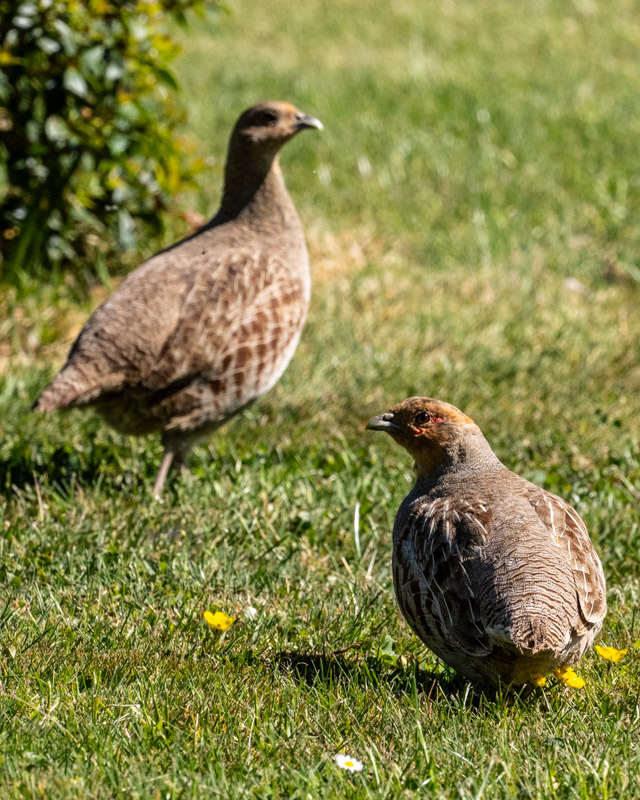
Grey Partridge
Grey - or English - Partridge (Perdix perdix) are back in the fields and margins of Kintbury Chase. Once ubiquitous over downland and the farmed lowlands, their numbers, already depleted by shooting, began to fall further in the 1950s due to changes in farming practice. Insecticides, herbicides, the disappearance of stubble, tussocky field margins, and the grubbing up of hedgerows, conspired to destroy their food, nesting habitat and shelter all at once. The annual release of 13 million Red-legged (or French) Partridge (Alectoris rufa) and 50 million Pheasants into the countryside for shooting (competing for food and spreading parasites) compounded this and all has played a part in reducing numbers by a shocking 94% since the 1980s. Now Red Listed, there are thought to be only 30,000 pairs left.
There are no local populations of this sedentary, site faithful bird, so David Hearn, our bird champion at Kintbury Chase has raised and released young birds among habitat that can support and hold them, over the last two years. It's a complex and thoughtful process of trial, experience and adjustment, and much care is taken to make sure they have access to all they need - food, shelter and protection from predators and disturbance. Grey Partridges spend much of the year in a group or 'covey', pairing up just after the shortest day. Large clutches of eggs are laid in grassy nests, close to sheltered hedge bottoms. For the first three weeks, chicks rely solely on insect food, particularly sawfly larvae and ants, of which there are healthy populations here (the land being out of agricultural production for some time) before graduating to young shoots and seeds. In the teeth of what has proven to be a 'blackthorn winter,' a late, recessive bite of chilly winteriness, coinciding with the snowy abundance of Blackthorn (Prunus spinosa) blossom, we move supplementary seed hoppers to quiet and protected places, and spot three pairs. It is such a joy to see this quintessentially English farmland bird, with its orange-coloured face and vermiculated graphite breast and back. When they lift their heads, the unmistakable chocolate-brown horseshoe on their chests is visible. They have a subtle, quiet beauty, unlike their gaudy Red-legged Partridge cousins, with a call that takes me straight back to a childhood spent roaming the edges of cornfields; a slow-repeated, soft but carrying kerrrr ick, kerrr ick. They are wonderful barometers of the health of this type of landscape: if it works for them, it will work for much else.
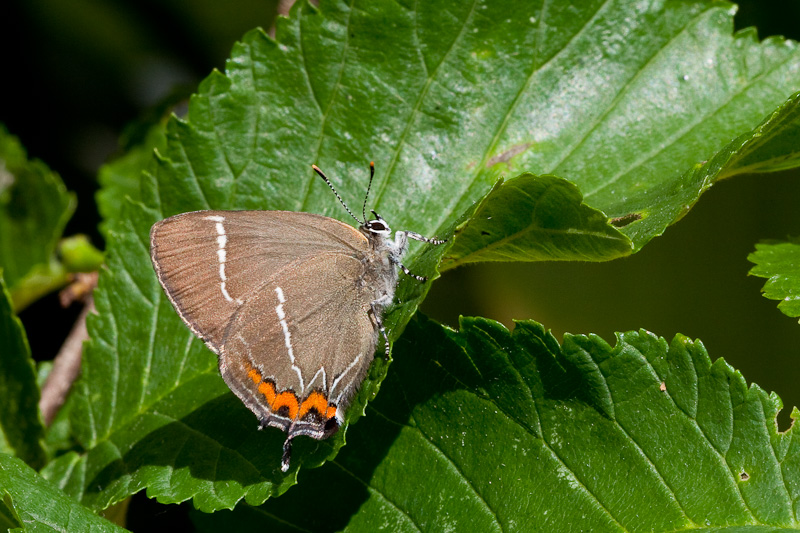
White-letter Hairstreak
Another species getting a desperately needed hand here, is a butterfly: the White-letter Hairstreak (Satyrium w-album), smallish and dark, with a white lightning streak on the underside of its hindwing, in the shape of a toppled 'W'. Scarce and elusive, it feeds solely on species of elm tree. There were concerns for its survival after Dutch elm disease, a fungus spread by elm bark beetles, first reached the UK in the 1960s. Spreading rapidly, it has killed millions of trees, with the similarly devastating effect Ash-dieback disease is having now. Some elms survive as hedgerow suckers, yet; but die from the disease by the time they reach 10-20 years old, falling out of hedges as pale, bare, beetle-hieroglyphed skeletons after high winds.
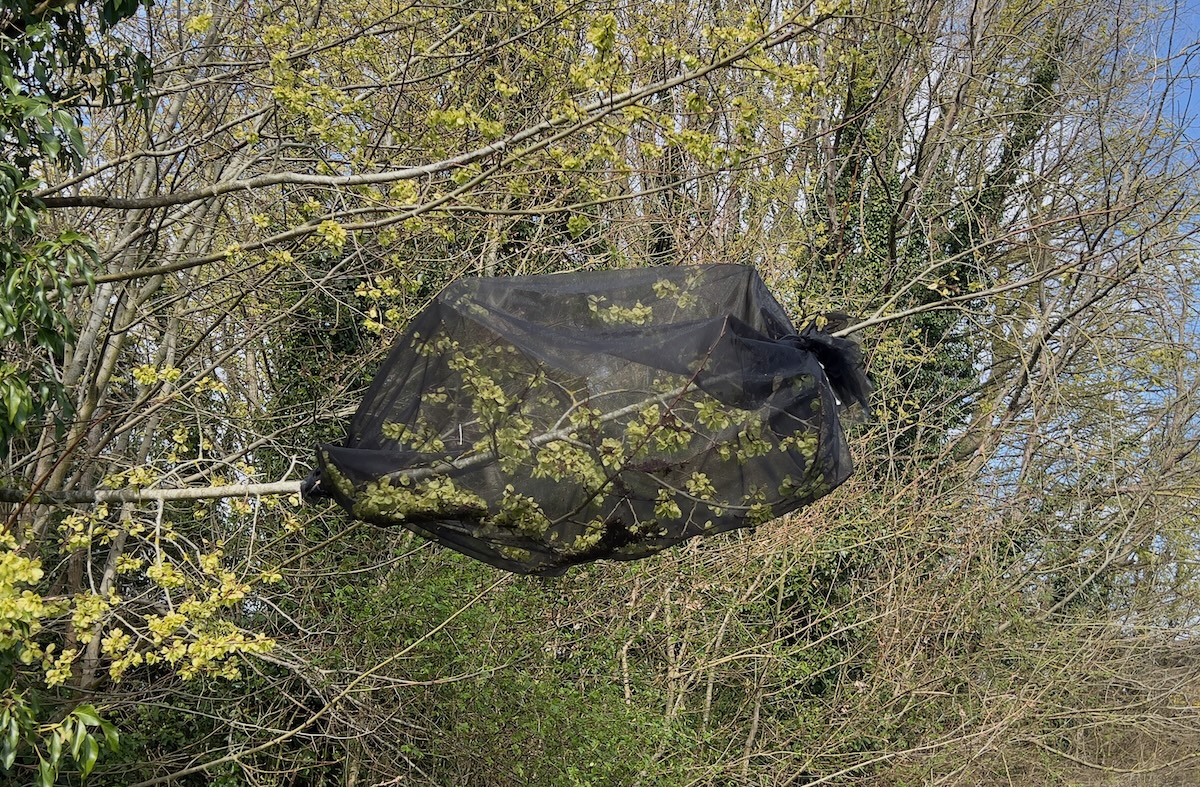
Sleeved White-letter Hairstreak eggs
The little 'butterfly of the elm' was not forgotten, however, and surviving colonies were located. In the meantime, disease-resistant elms have, and are being, cultivated and trialed for their suitability in the UK (for example, if flowering time is concurrent with larvae emergence.) Several have been planted here. Pete Eeles, our butterfly specialist, shows me a colony that are using hedgerow Wych Elm (Ulmus glabra) here, where he has 'sleeved' eggs and the subsequent larvae within nets for their protection. Like Field, or Smooth-Leaved Elm (Ulmus minor) and English Elm (Ulmus procera), Wych Elm flowers (like Blackthorn too) in early spring before the leaves appear. The flowers have already ceded to what appears to be a blossom of pale-green, papery rosettes or 'samaras' that surround a pink, central seed. Some of the branches waft fine, net, bat-wing sleeves over the meadow. Within, the butterflies' tiny, flying-saucer-shaped egg cases have begun to hatch, and we spot the first minute larvae. Thus protected from predators by these breezy tents, the larvae will live quite naturally on the growing foodplant through their instar stages, until pupation when the sleeves are removed and the adult butterflies allowed to fly free.
We wander out to look at exciting progress on the new chalk scrape habitat and the Eco Centre building, searching for the larval webs of other butterfly caterpillars as we go. For now, it is warm and dry enough to go without coats, and we spot our first Orange-tip (Anthocharis cardamines) butterfly of the year, all the while hearing the Grey Partridge calling at intervals, on a softened breeze.
The interconnectedness of species, timing and habitat is key to the dangers of viewing anything in isolation. It is folly or a foil to thinking we are not part of a complex community of life on earth, where, even when our species breaks threads in that web, we can commit and act to remake it. Despite the late hour; together, saving it.
For reference: Ecological Consequences of Gamebird Releasing and Management on Lowland Shoots in England.