by Nicola Chester
4th June 2026
I had the recent delight of speaking at Caught By The River's intimate festival at Elmley National Nature Reserve on the Isle of Sheppey in North Kent. Caught By The River is an online 'meeting place' at a confluence of arts, nature and culture, and the festival featured musicians, DJs, writers and artists inspired by nature, in the agriculturally hallowed 1830s threshing barn, out on the marshes. A little grey 'Fergie' tractor, the first on the farm in the 1940s, proved a gathering point under fairy lights strung from the rafters. I spoke on the themes in my book, Ghosts of the Farm, with Gareth Fulton, who, with his wife Georgina, has continued the pioneering, rehealing nature - work begun by Georgina's parents, Philip and Corinne Merricks, in the 1970s. The Merricks' work, to transform and restore nature to this formerly intensive arable and livestock farm, resulted in the 3,300 acres of marshy wilderness, grazed by 600 cows, we see today. It was designated a National Nature Reserve in 1991, and is the only one you can stay on.
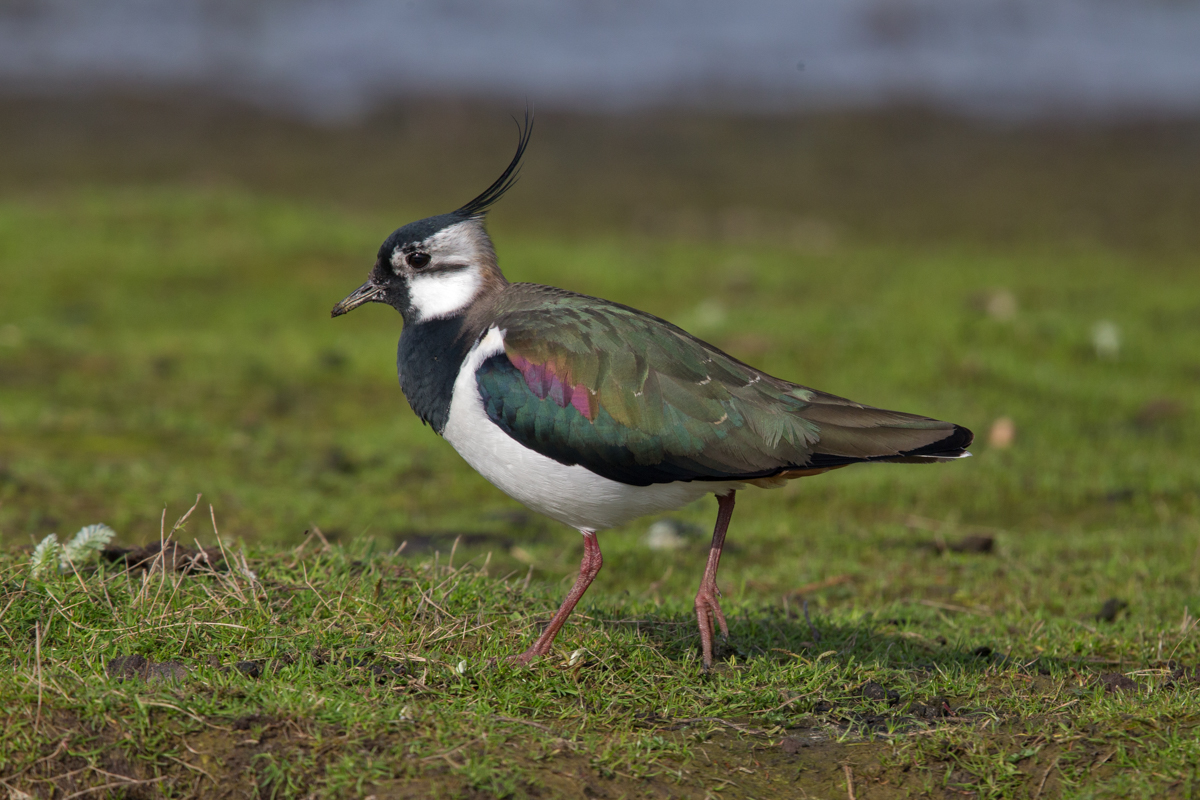
Lapwing
As soon as we turned onto the two-mile track leading to the barn and 18th Century Kingshill Farmhouse, and stopped to let the first of several Lapwings (Vanellus vanellus) shepherd their fluffy chicks across in front of us, we knew we were somewhere special. It took us around 40 minutes to drive those two miles. It was very exciting.
We spent the weekend tripping over Brown Hares (Lepus europaeus), hearing and spotting Bearded Tits (Panurus biarmicus, or Moustached Reedlings as they perhaps more correctly ought to be known) and Bitterns (Botaurus stellaris); listening to the atmospheric calls of Redshank (Tringa totanus); being woken by Cuckoo (Cuculus canorus) and Curlew (Numenius arquata) and watching Marsh Harriers (Circus aeruginosus), met by volley after volley of waders protecting their nests. The balance and the abundance was astonishing, thrilling, and I'd be lying if I didn't say, emotional.
I returned to read my friend Amy-Jane Beer's Guardian Country Diary column, about her visit to Biebrza National Park in Poland. She describes encountering nature as rich and diverse as Elk (Alces alces), Lady's-slipper orchid (Cypripedium calceolus), carpets of Lily-of-the-Valley (Convallaria majalis), White Stork (Ciconia ciconia), Beaver (Castor fiber) and 'more bird species in a day than I [encounter] in a year at home.' Amy wonders at first whether it's a mistake, to experience such a rich, but 'devastating demonstration of what we've lost at home.' She rallies, seeing it as a recalibration of what things can and should be; a spurring on: and I come home with a full heart, to increasing abundance and diversity on my own doorstep, in a spring with ten years rehealing nature-work undertaken here at Kintbury Chase, behind it.
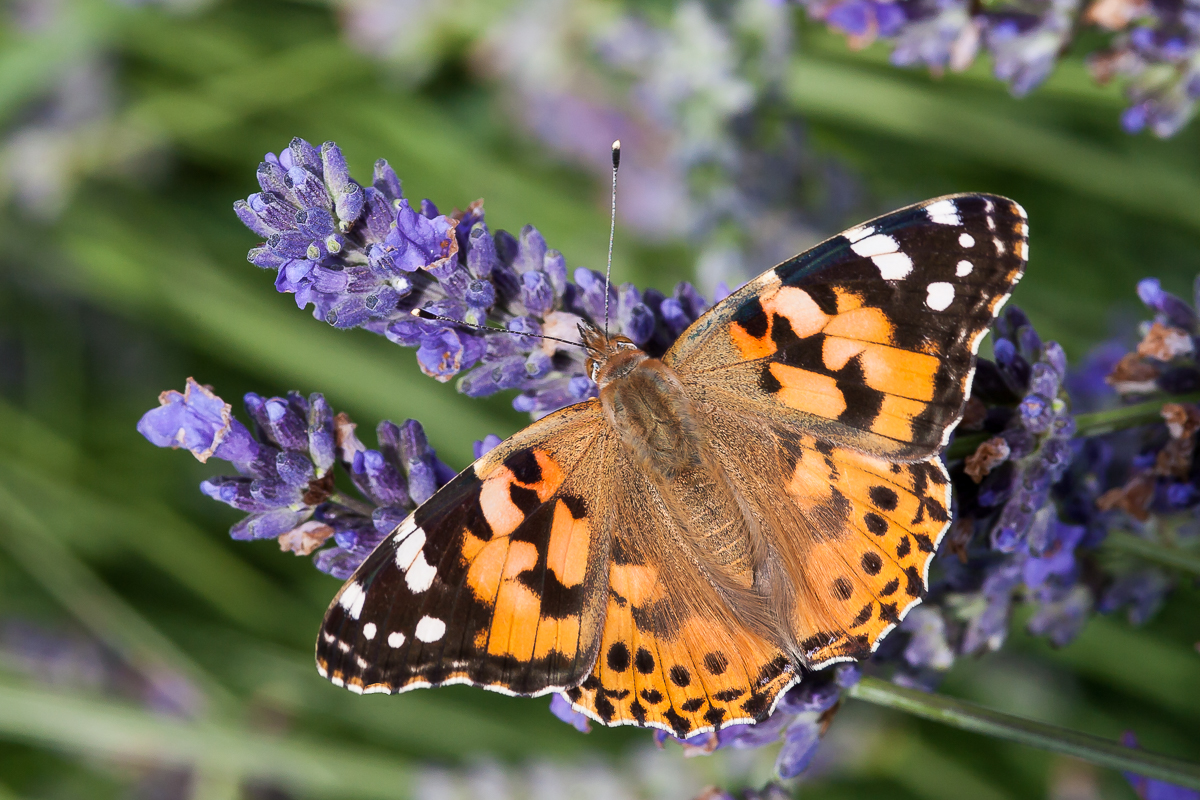
Painted Lady
After the recent heatwave, the woods are cool and alive with the fluttering and tseeiping of so many fledgling birds. Three times, the copper coils of Slow Worms (Anguis fragilis) writhe away from my feet, and there is an influx, as there seems to be across the south this year, of migrant Painted Lady (Vanessa cardui) butterflies. Dozens of Broad-bodied Chasers (Libellula depressa) fly down the rides and over the bramble, the Wedgewood-blue males like little shards of sky. I stop for ages near the corner of Catmore Copse to simply watch and listen. In just two oak trees, I spot a recently fledged Treecreeper family (Certhia familiaris), a Nuthatch family (Sitta europaea), Chaffinch (Fringilla coelebs) fledglings being fed, Long-tailed tits (Aegithalos caudatus) unravelling themselves like looped bunting, a pair of bright, plum-coloured Bullfinches (Pyrrhula pyrrhula), Siskin (Carduelis spinus) and Goldfinch (Carduelis carduelis).
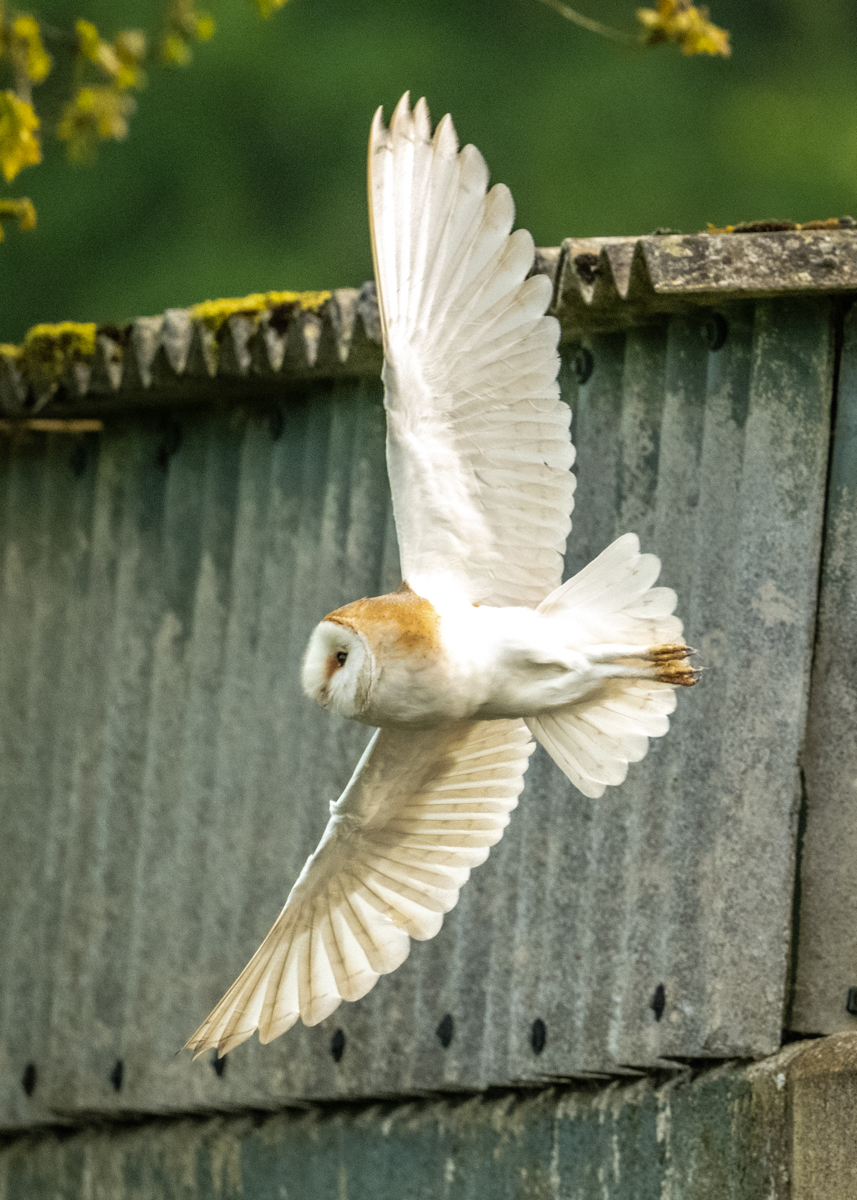
Barn Owl
My Merlin bird App picks up Firecrest (Regulus ignicapillus) which I have missed, and poses Corn Bunting (Emberiza calandra); I listen, but do not hear the latter, though there is plenty here to sustain them. Further on, I lift my binoculars to investigate a small flock of tits that I think are fledglings, and instead find I am focusing in on a sleeping Tawny Owl (Strix aluco). It has made itself tall, and is pressed, snuggled sweetly, against the bark of an oak, so it looks like an extension of it; a cryptic burr, blended almost imperceptibly. It has its eyes shut tight against the annoyance of the small birds, expending their caterpillar-gathering energy, mobbing it.
Walking on twilit evenings, there is the regular hiss of a hunting Barn Owl (Tyto alba), and Tawny Owl chicks calling chiseek, chiseek for food all the way out and all the way home, just as the Blue and Great Tit chicks had in daylight. I am momentarily alarmed, then tickled to be hit on my shoulder and neck by the enormous, clumsy doodlebug of a Cockchafer Beetle (Melolontha melolontha). With a body like a split acorn case, the larvae spend between 3-5 years growing underground, before emerging somehow, from hard-baked ground, late spring. Whole populations of this rather cutely, fan-antennaed behemoth, have been lost completely to agricultural poisons, but here, they are clearly doing well. Two seem to follow me home, hurling themselves at the window like thrown gravel, until I put the light out; reminding me how things should, and can be and indeed, in places like these, are becoming again. A tap on the shoulder (or window) that says, keep going, don't give up.