by Nicola Chester
4th September 2026
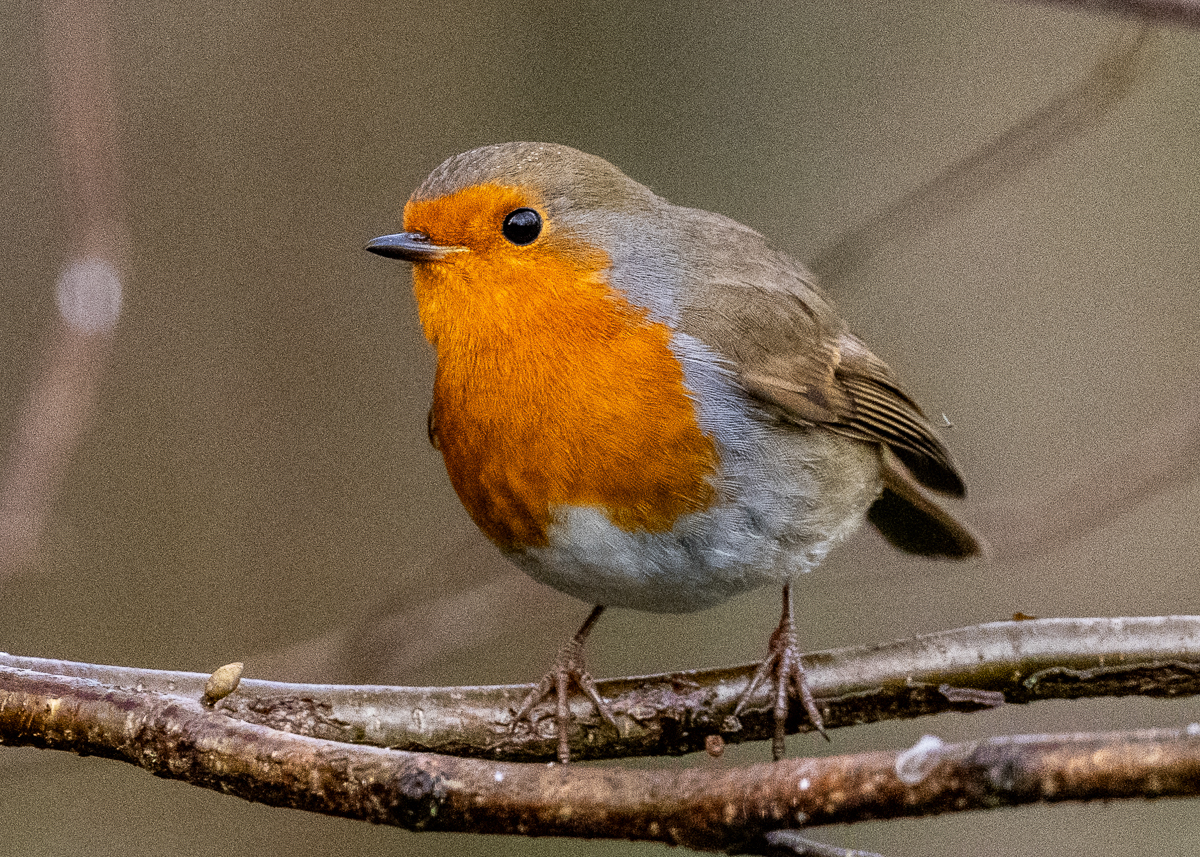
Robin
Sweet September has arrived and not a moment too soon in this heat-exhausted summer of drought and wildfires. Rewilding, rehealing, rewetting and regenerative farming have become front-page topics, hot as the summer, with plenty of proof they are working for climate and people, as much as they are for wildlife. It doesn't feel quite like September yet. Certainly not the Septembers that imprint themselves upon us throughout our childhoods and into early adulthood, when the first nip in the air heralds a back-to-school feeling that never truly leaves us. That those days will not come again is accepted as the normal procession of life's journey; that the weather of those Septembers will not come again (and are not even recognised by a whole generation) is something much harder to comprehend.
Nevertheless, there has been a softening, a dampening, a quietening, a pause, and the first rain to fall in the whole of summer, here. The season shifts a hip. Pricks its ears in a new direction, snuffs the air, and waits: something fresher this way comes.
September is the alternative 'new year' that we feel instinctively, in our emotional weather and our culture; connected as it is to agriculture, to nature. A post-harvest month, when historically, children were freer enough to return to school, when much of the ground was readied for another year's crops and gardens were begun to be put to bed. A time to knuckle down to new projects, rest a little and prepare for the autumn and winter ahead. At the end of the month, the 29th of September is Michaelmas, a largely forgotten 'quarter day' and Feast Day in the calendar, when agricultural ties and tenancies were renewed, ended or begun afresh, and decisions about the next farming year were made. Local fun fairs, once hiring fairs, still mark the date in name and spirit, with the Michaelmas Fair in Newbury and the Marlborough Mop - where those looking for work took or wore an implement of some kind on their clothing, to signify their trade and availability.

Blackcap
I'm not one for change really, but I do love this thoughtful, reflective time of year, with its wistful and indulgent kind of melancholy and resolve that comes with looking both forwards, and back. In the woods now - and indeed almost anywhere - Robins (Erithacus rubecula) seem to embody this in their silvery, autumn subsong. Sung through a half-closed bill like a thought spoken aloud, almost to itself, it is the same song delivered differently and in direct contrast to the full-throated, beak-wide proclamations of spring. As other birds move through the trees and skies on their way south, or to establish new territories, Robins seem to stay, reflectively whistling, or singing to defend a winter territory, while so much else moves around them. Though it won't be long before their numbers are swelled by winter migrants. They are not the only bird with an autumn subsong though - Chiffchaffs (Phylloscopus collybita), Blackcaps (Sylvia atricapilla), and Willow Warblers (Phylloscopus trochilus) are among others that do it. Some are this year's juveniles, sometimes even females, practicing, trying to remember the songs of their parents heard in the egg, then nest, months ago. Learning and rambling as they go along, they are unlikely to hear the song repeated themselves until they are back on our shores next spring, singing for their own mate and territory. It's hard not to think, on hearing those songs, with our fallible, anthropocentric human minds, that there isn't an element of remembrance and goodbye in them, their school or university days over, threading through the fading leaf canopy, like little loosened leaves themselves, drawn ever south. The Willow Warbler's song embodies this beautifully; like the last person still up, a little overtired, after the party is over.

Swallow
As I walk through the gate into the western edge of Snakes Hill Wood, just before sunset, a Blackbird (Turdus merula) is singing a quiet rendition of his spring-honeyed, languorous melody. I can see him in a low Holly (Ilex aquifolium) tree, his closed bill the slightest bar of gold. He seems himself to have taken on a reflective pose. Like the Robin, like the Willow Warblers, head cocked on one side, looking down. We glean from it a certain tristia or introspection that matches and confirms our own; an 'ah well' sadness that comforts us. Songs sung in a minor key. But does that lowered third I think I hear (but cannot play) exist between the syrinx of a bird, the season and whatever its own intention might be? Or is the song the same, just heard in a different season and quieter?
I take the track home, turning my face into the wind coming off the down and feel an anticipation for whatever comes next, my pencils metaphorically sharpened and zipped into their new pencil case. There is the scent of smoke that feels right now. A bonfire that is just that, the smell right in its timing, unalarming and reassuring and with it, the realisation that, although we never saw them leave, the swallows have gone, haven't they?